The Piprahwa Discovery
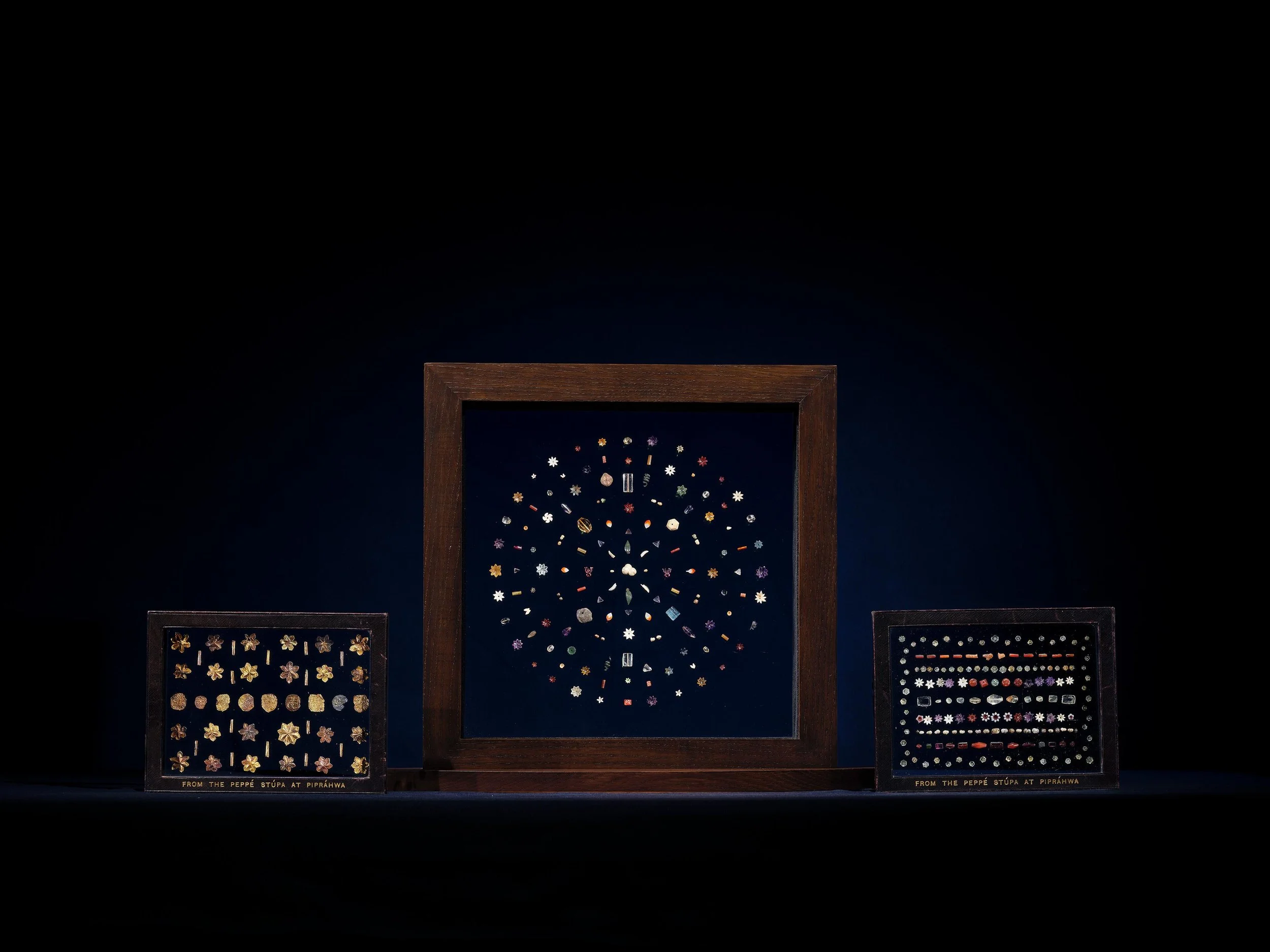
In 1898, W.C.Peppé, a British Landowner, excavated a stupa at Piprahwa, in Uttar Pradesh close to the Nepal border. After cutting through eighteen feet of solid brickwork, he uncovered a large stone coffer. Inside were five reliquary urns, one bearing an inscription identifying its contents as the Sakya clan’s share of the cremated remains of the Gautama Buddha. The urns also contained more than 1,500 gemstones and gold objects, offerings deposited roughly two centuries after the Buddha’s cremation at Kushinagar, during the enlargement of the stupa under Emperor Ashoka.
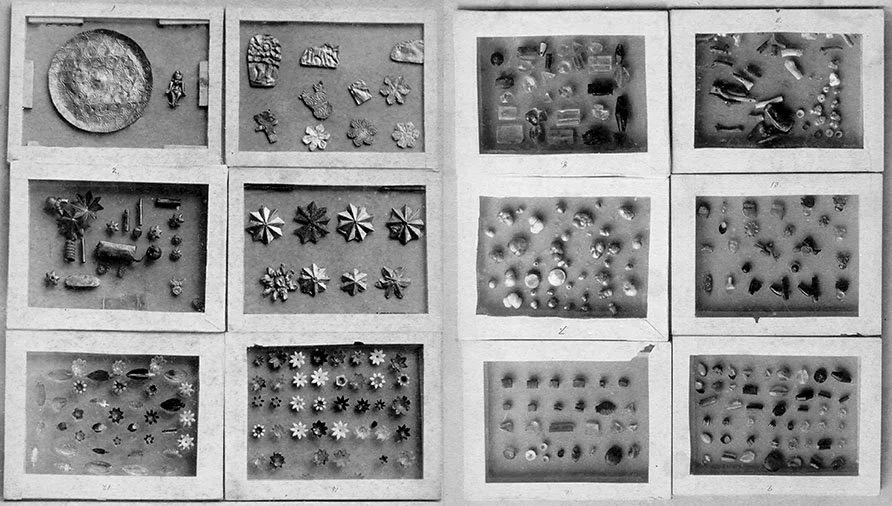
Cases containing Jewels & other precious objects given to the museum of Kolkata soon after the discovery
In late summer 2025, the Kolkata museum recovered two hundred and twenty one of the more than 1200 gems it had originally received from W.C.Peppé following his discovery. They are now shown together with the 349 gems retained by the Peppé family and newly repatriated to India, as part of The Light and the Lotus: Relics of the Awakened One at the Rai Pithora Cultural Complex.