
The History of the Birdpur Estate
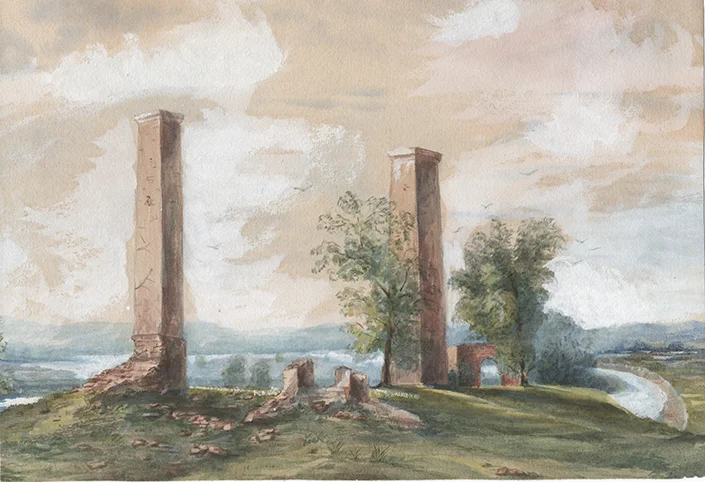
The sugar mills at aktawa
English involvement in India began in 1613, when the East India Company established its first trading post. Although the company intended to act solely as a commercial enterprise, by the early 18th century, it was compelled to raise its own armies in. order to protect its trading interests.
By 1800 the Company, acting on behalf of Britain, directly governed about two thirds of the Indian subcontinent and exercised paramount influence over most of the remaining independent states: Oudh, lying north west of Delhi and bordering Nepal, was pressured to cede part of its eastern territory adjoining Bihar. The ceded tract included a strip of jungle and swamp - approximately 70 miles long and 30 miles wide - known as the Terrai, stretching from the Nepalese frontier to a line just north of Gorakhpur. The Terrai was notorious for its unhealthy climate, only small indigenous communities, long accustomed to its “pestilential vapours” were able to survive there.
In the early 1830s, Robert Merttins Bird, an influential revenue administrator of the North West Provinces, sanctioned the granting of tracts of land in the Terrai with the aim of clearing, cultivating and settling the region. Among the first recipients of these ‘Jungle Grants’, as they were known, were the Gibbon brothers. The grant they applied for was Birdpur, a strip of land 40 miles north of Gorakhpur; 14 miles long and 3 miles wide, with its northern boundary abutting Nepal. Hugh Gibbon was appointed manager of Birdpur, and his brother John served as his assistant.
In 1838 Hugh married a young widow, Delia Claxton. The development and wider availability of quinine for treating malarial fevers, together with the importation of large numbers of labourers enabled the brothers to start clearing the land. Both, however suffered severe attacks of malaria. Hugh died in 1844 and John in 1848, leaving Delia alone at Birdpur.
In 1843 George Peppé, 23, and his brother William, 21, both of Aberdeen, were employed to set up a sugar mill at Aktawa, 10 miles north of Gorakhpur. Eight months after their arrival George was instructed to dismiss the manager of the mill and take on the job himself. By 1845 he was debilitated by recurrent fevers and returned to Scotland, leaving William in charge at Aktawa. In 1848 the mill was sold and a new manger was appointed. William then secured a position managing the estates at Birdpur.
At this time the Province of Oudh was unsettled, and many tenants came from there seeking land in Birdpur. Seeing an opportunity, William encouraged resettlement. Shortly after taking charge he discontinued the cultivation of Indigo - believing the soil to be too low and swampy and better suited for rice cultivation - and granted tenants seven-year leases on his former indigo plots together with adjoining jungle. Under these favourable terms, the jungle was rapidly cleared, villages were established, and most of the land was bought under cultivation. One of the original conditions of the Jungle Grants was that the jungle must be cleared within a specified period, a requirement many grantees had failed to meet.
In October 1849 William married Delia Gibbon, the widowed part owner of Birdpur, and under the laws of the time acquired her legal rights in the estate. He gradually purchased additional shares whenever they became available, eventually becoming the principal proprietor. Trained as an engineer, he built reservoirs and canals throughout the estate and introduced a long grain rice variety that became its main crop.
Between 1857 & 1859 William, along with many of his Birdpur tenants, fought agaisnt insurgents during the Indian Uprising (known to the British as the Indian Mutiny). After the revolt, Queen Victoria issued a proclamation promising Indian subjects the same rights as other British subjects. For his services during the uprising, William recieved a lease of the Bheloungie estate. He later acquired two further estates becoming manager and proprietor of almost 50 square miles of land. In the early 1880s he handed over the management of the estates to his elder son William Claxton Peppé.
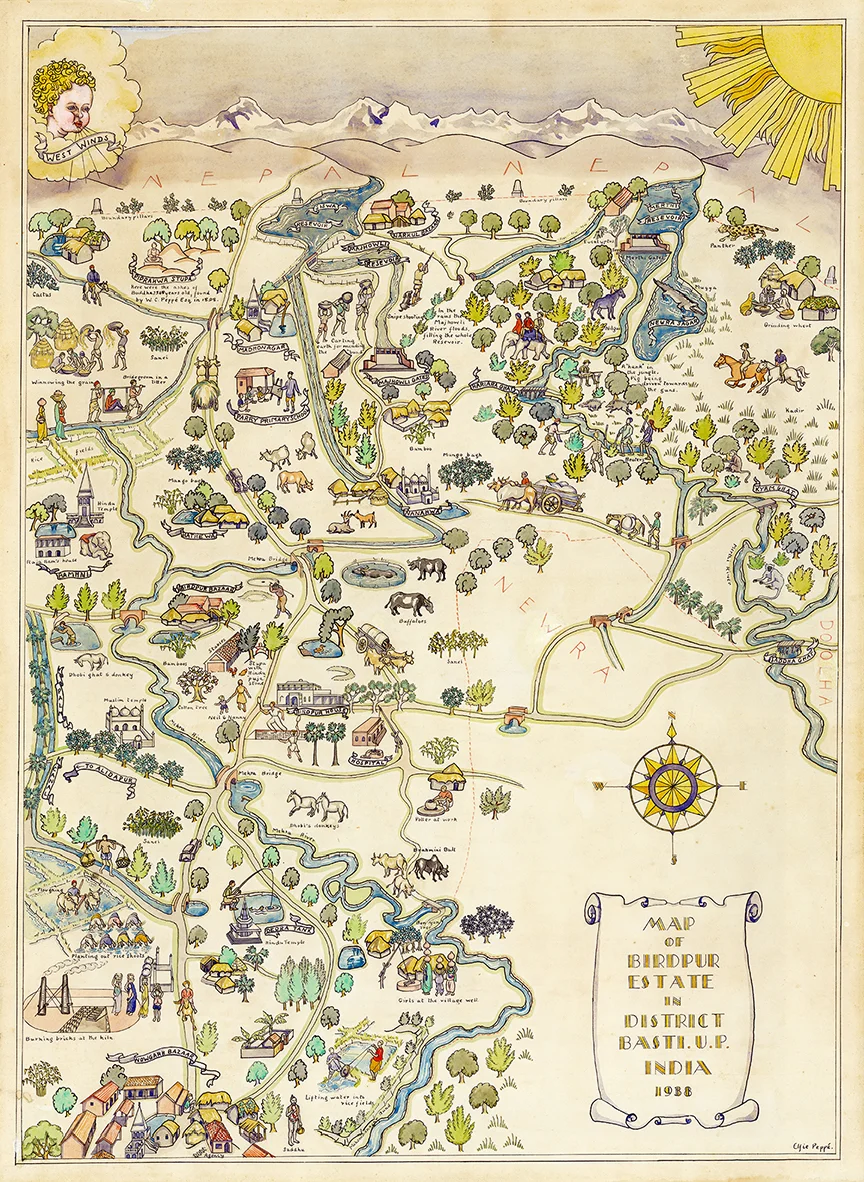
Illustrated map of the birdpur estate by Elfie Peppé 1938 (Picture courtesy of Neil Peppé)